Most silo decisions start with one question: how many tonnes? The better question is: how fast, and how completely, do you need to get them out?
A flat-bottom silo is the right answer for long-term storage at scale, up to 25,000 m³ in a single unit. But it relies on a sweep auger to clear the last grain, and that is where the cost sits: more mechanics to maintain, slower emptying, product left behind.
A hopper silo works differently: gravity does the heavy lifting. The 45° or 60° cone empties the silo completely, and it suits products that segregate, like oilseeds or flour. It also needs a simpler foundation: a concrete slab instead of a ring, and space under the silo for the mechanization.
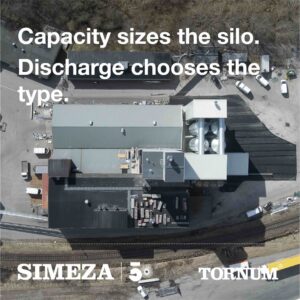
In Kimstad, Sweden, we delivered four HBS-S hopper silos for 700 t of oats, with cone discharge fitted for the plant’s process.
Capacity sizes the silo. Discharge decides which type you build.
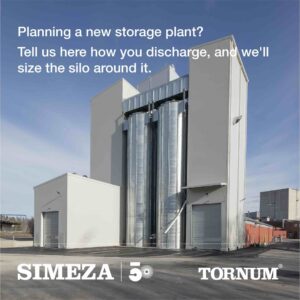
Planning a new storage plant? Tell us here how you discharge, and we’ll size the silo around it.