Every year, the world loses enough grain to feed 1 billion people.
Not in the field. After the harvest.
Post-harvest losses are one of the most underreported challenges in global food security, and the figures vary sharply by region:
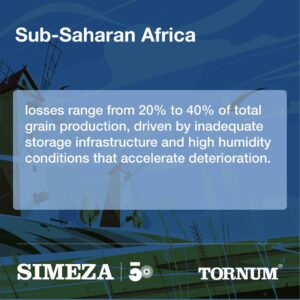
📍 Sub-Saharan Africa: losses range from 20% to 40% of total grain production, driven by inadequate storage infrastructure and high humidity conditions that accelerate deterioration.
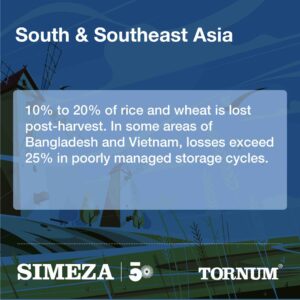
📍 South & Southeast Asia: 10% to 20% of rice and wheat is lost post-harvest. In some areas of Bangladesh and Vietnam, losses exceed 25% in poorly managed storage cycles.
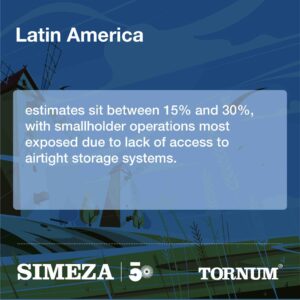
📍 Latin America: estimates sit between 15% and 30%, with smallholder operations most exposed due to lack of access to airtight storage systems.
📍 Middle East & North Africa: 10% to 20%, compounded by heat stress and long-distance transport requirements.
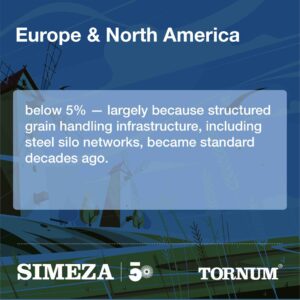
📍 Europe & North America: below 5%, largely because structured grain handling infrastructure, including steel silo networks, became standard decades ago.
The pattern is clear: where storage infrastructure exists, losses fall. Where it doesn’t, grain, and the investment behind it, disappears.
At SIMEZA Silos, we’ve spent 50 years engineering storage solutions for the conditions that actually exist on the ground: the humidity of Bangladesh, the heat of Saudi Arabia, and the fumigation standards of Australia. Not from a drawing-table perspective. From experience.
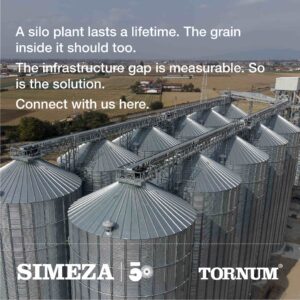
A silo plant lasts a lifetime. The grain inside it should, too.
The infrastructure gap is measurable. So is the solution.
Connect with us here